9. Image Theatre
Summary
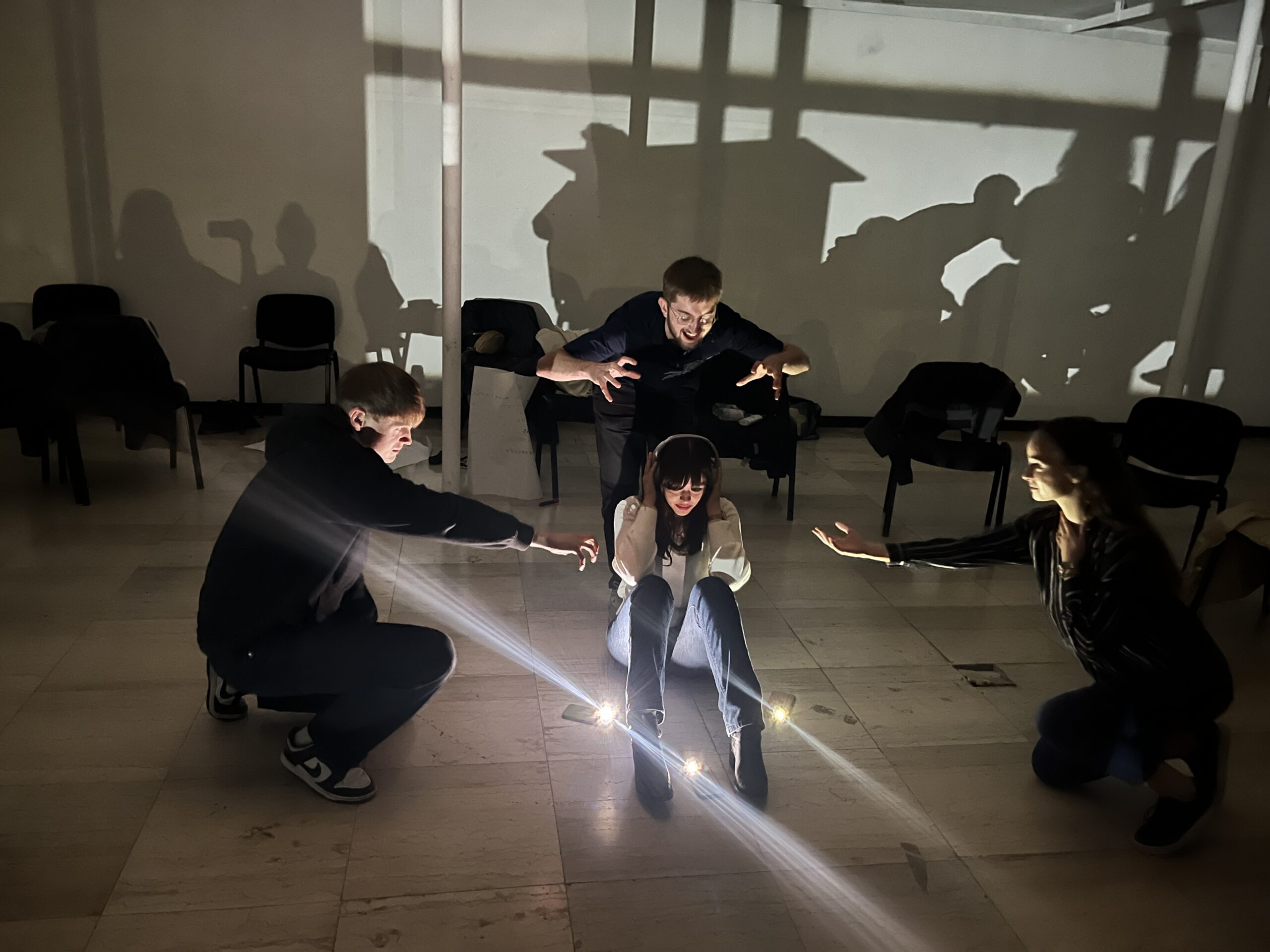
Image Theatre is very often used for conflict transformation and the release of creative power. It is part of the famous Theatre of the Oppressed techniques. It promotes dialogue on sensitive community issues through the use of different games and exercises. Image theatre uses three important aspects: body, voice, and movement. Without speaking the same language, people can share and enjoy this activity, thereby exploring what is inside of them.
We all use the same language in our daily lives that actors use on stage: our voice, our body, and our expressions. As Augusto Boal puts it nicely in his book on Theatre of the Oppressed: “I believe that all the truly revolutionary theatrical groups should transfer to the people the means of production in the theatre so that the people themselves may utilize them. The theatre is a weapon, and it is the people who should wield it.” (Boal, 1993)
Objectives / Goals
- To liberate participants
- To transform them
- To become aware of repressed ideas
- To play / to act
- To raise awareness of peacebuilding and understanding others
- To foster empathy – put yourself in the other person’s shoes
- To create a safe space and encourage youth to build a better future for all
- To inspire
Keywords
- Art
- Empathy
- Justice
- Activism
- Transformation
- Freedom
Number of participants
15 – 20
Type of participants
- School educational staff
- Peace builders
- Community workers
- Theatre professionals
- Students aged 15 and over
Duration
2 hours and 30 minutes at least
Materials / preparation
- Chairs (optional)
- Sheets of paper
- Pens
Instructions
Step 1 (10 -15 minutes): Warmup activities
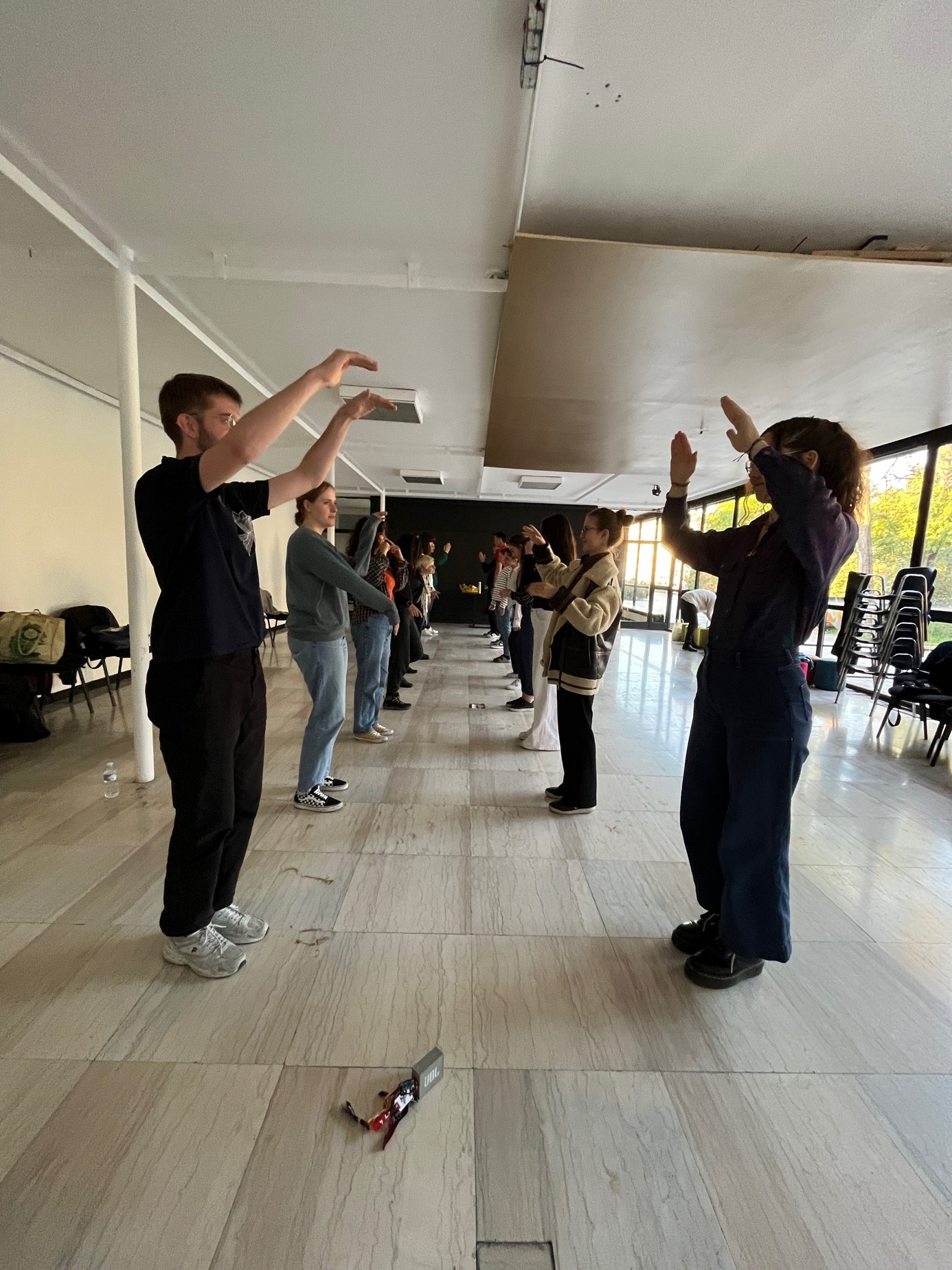
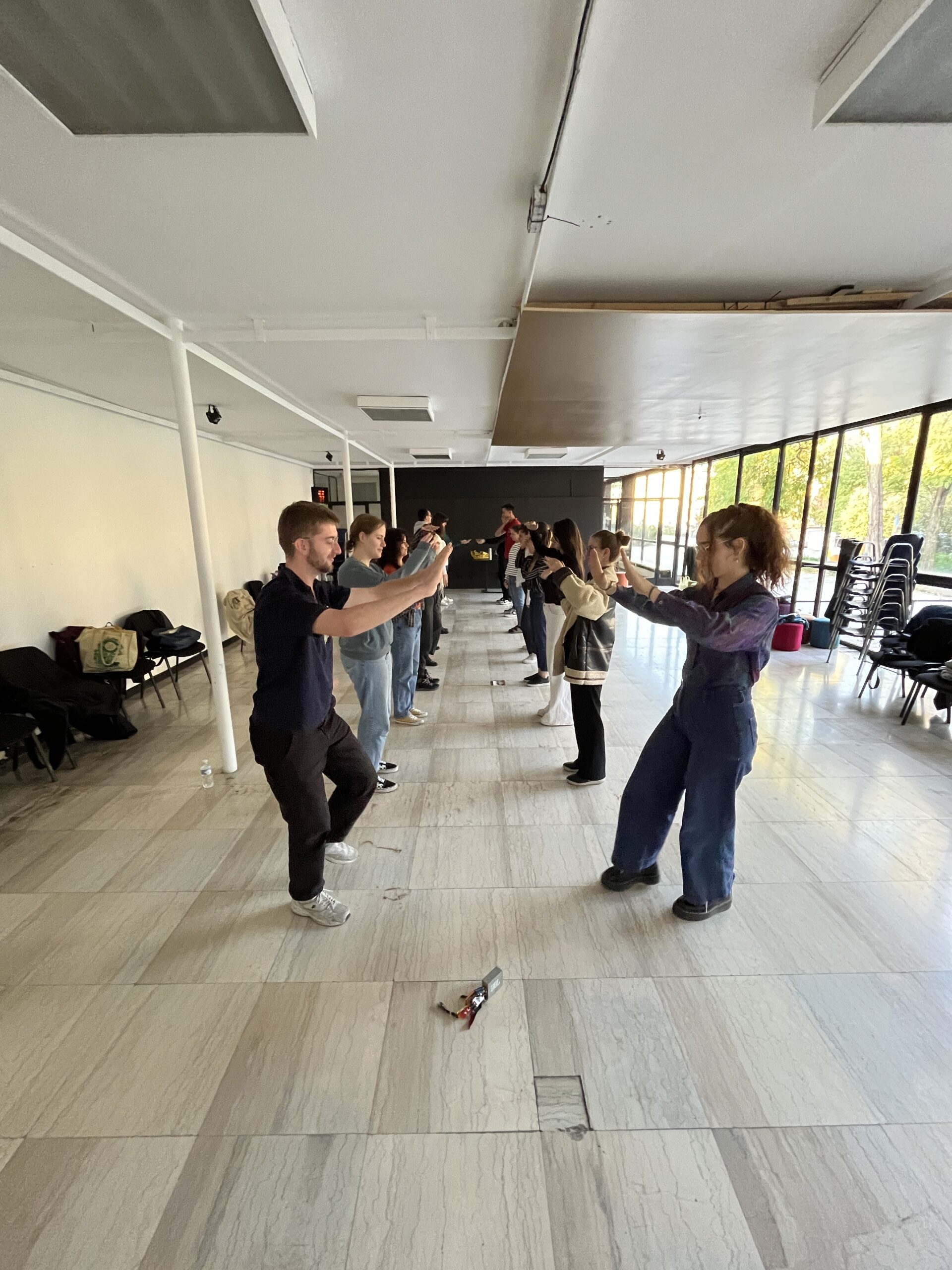
If the participants are meeting for the first time, time shall be allocated for team building.
The facilitator can use warm-up activities
like ‘the Name Game’ or ‘Getting to Know’
in the first few sessions. The Name game is
done in the way that everyone, one by one,
pronounces their name followed by a
movement. Everyone in the circle repeats
it in the same manner or even exaggerates
a bit. This is a fun activity to start with.
If the participants already know each other,
they can play games like ‘zib-zab-boing’,
‘the Mirroring game’ etc., or the ‘Columbian
Hypnosis’ (see further explanations in
Augusto Boal’s book ‘Games for Actors
and Non-Actors’ Routledge, 1992.
https://www.deepfun.com/wp-content/
uploads/2010/06/Games-for-actors-and-
non-actors…Augusto-Boal.pdf). Music can
be played during the mirroring game as it
relaxes the participants and gives them
tips on how to move more fluidly.
The mirroring game
Step 2 (120 minutes): it consists of two main activities – Image Theatre & Dynamisation
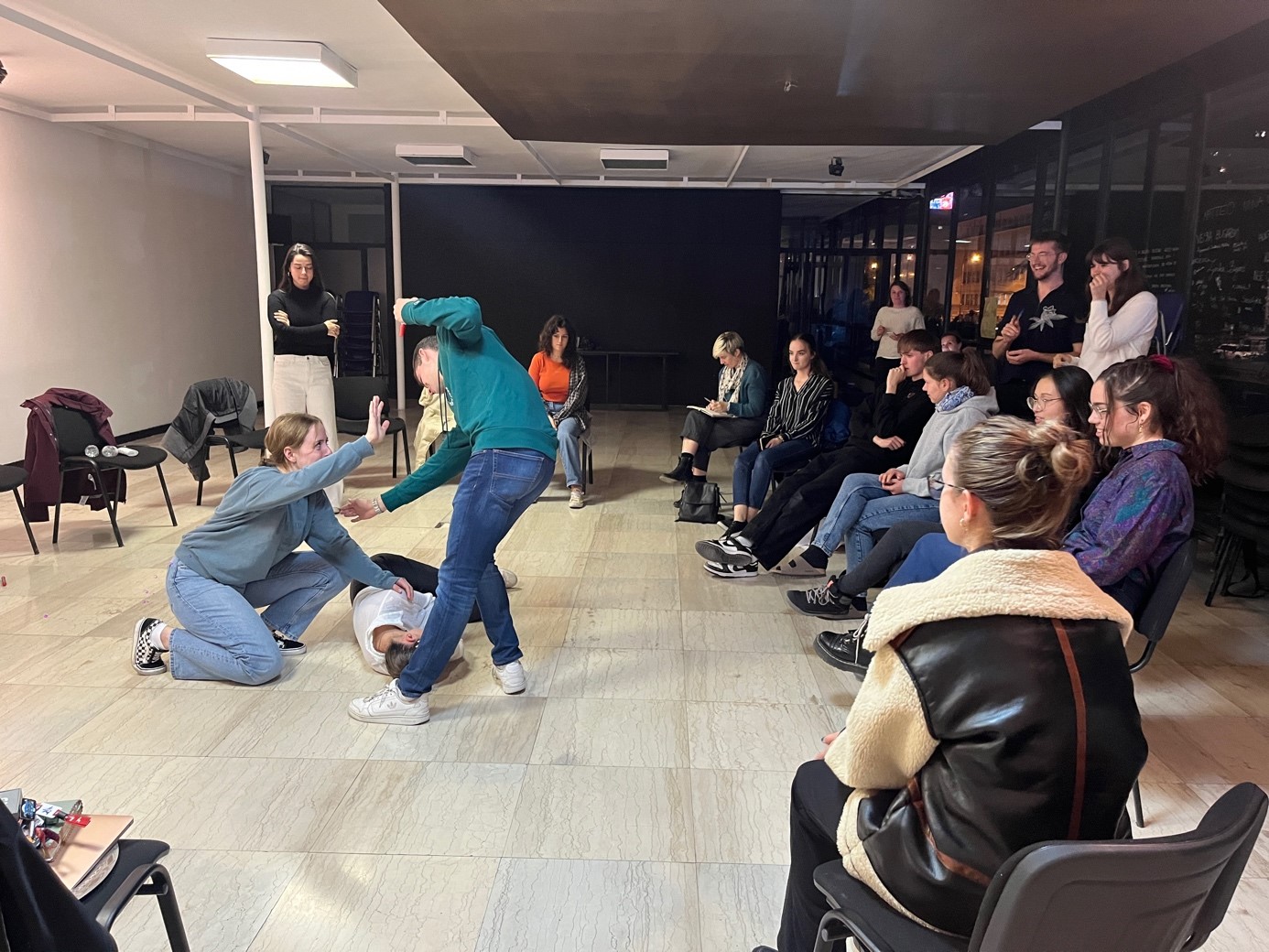
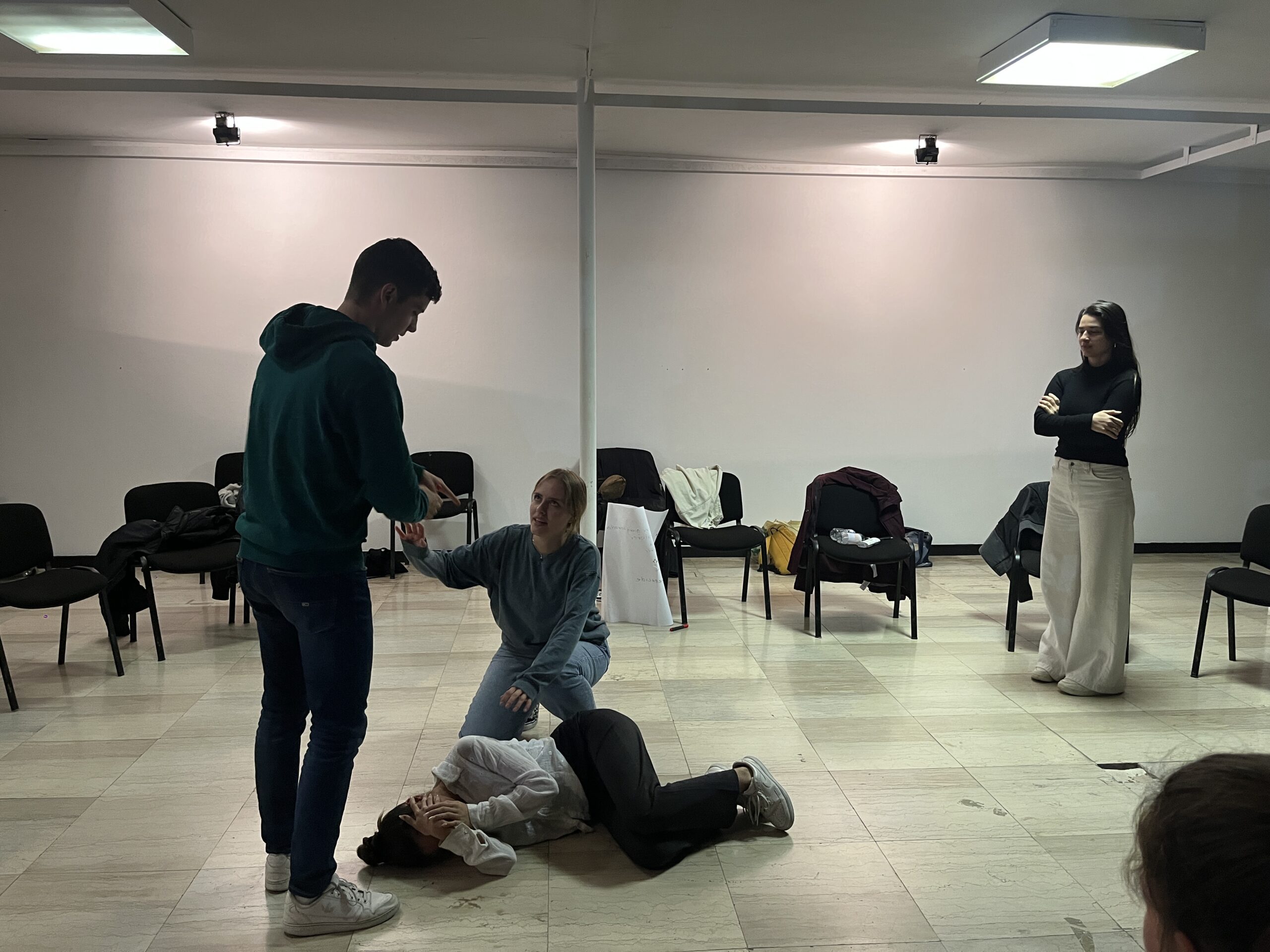
- The facilitator explains the concept of Image Theatre to the group and gives examples of oppression in society.
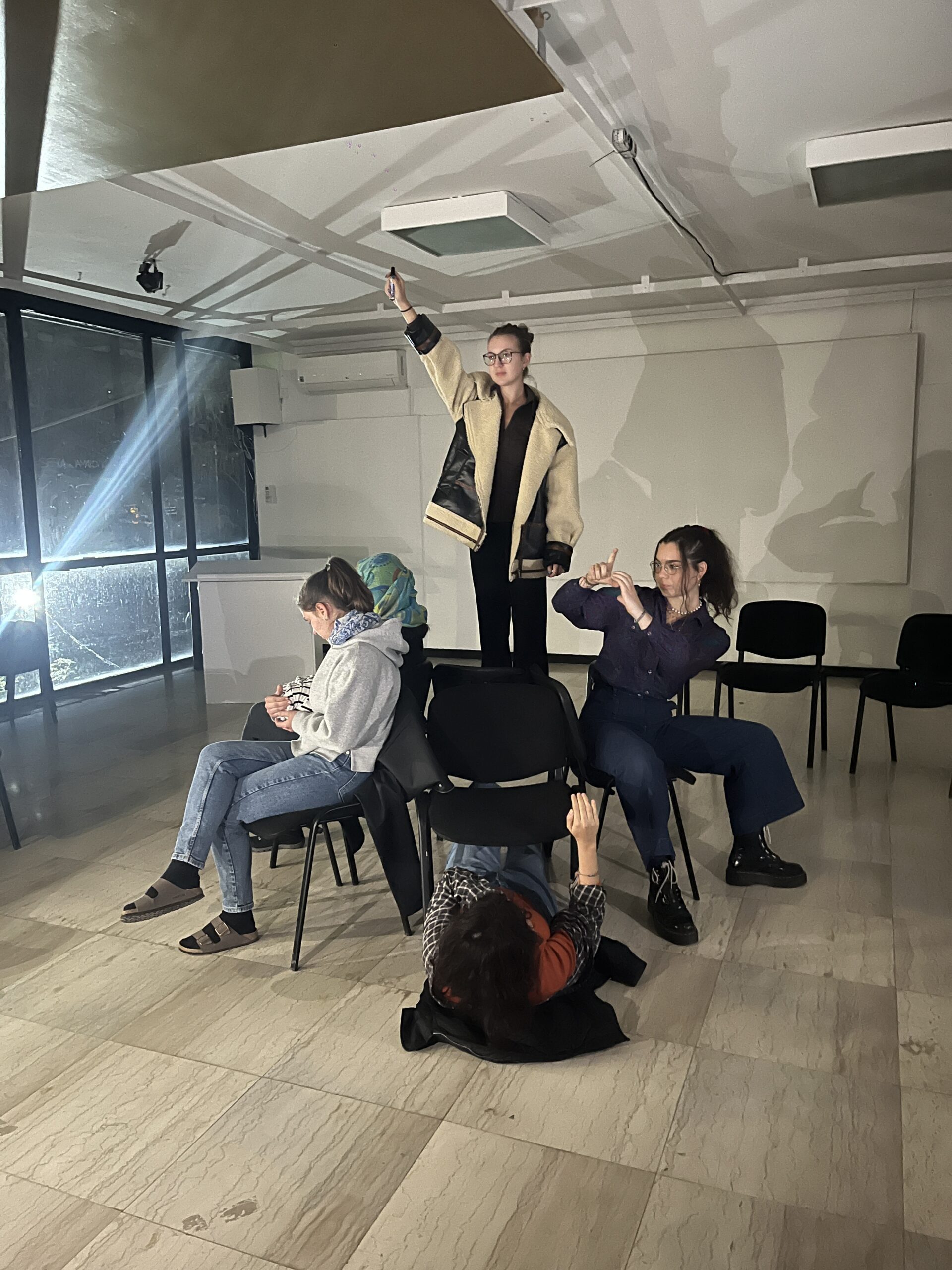
- Image Theatre activity: The participants stand in a circle, facing outwards. The facilitator announces a word or phrase, for example ‘love’, ‘peace’, ‘mother’, ‘father’, etc. Each participant thinks about how to use this word using their own body. On the count of 5, they turn around and show their representation of the word simultaneously. The facilitator repeats the words many times, and encourages participants to suggest their own words.
The activity can be extended to a reflection
of the whole group together: participants
stand in the circle and the first volunteer
strikes a pose. This can take a moment, one
by one the participants think about a pose
and then come forward with. One after
another, they build up together as a group,
one image.
- Dynamisation: Once all the images
have been presented, they can be
dynamised. Dynamisation occurs on
three levels: movement, sound and
action.This can be done either one
image at a time, or one sub-group
at a time (Babbage, Francis, Augusto
Boal, Biographies – Routledge
performance practitioners, Routledge,
New York, 2004).
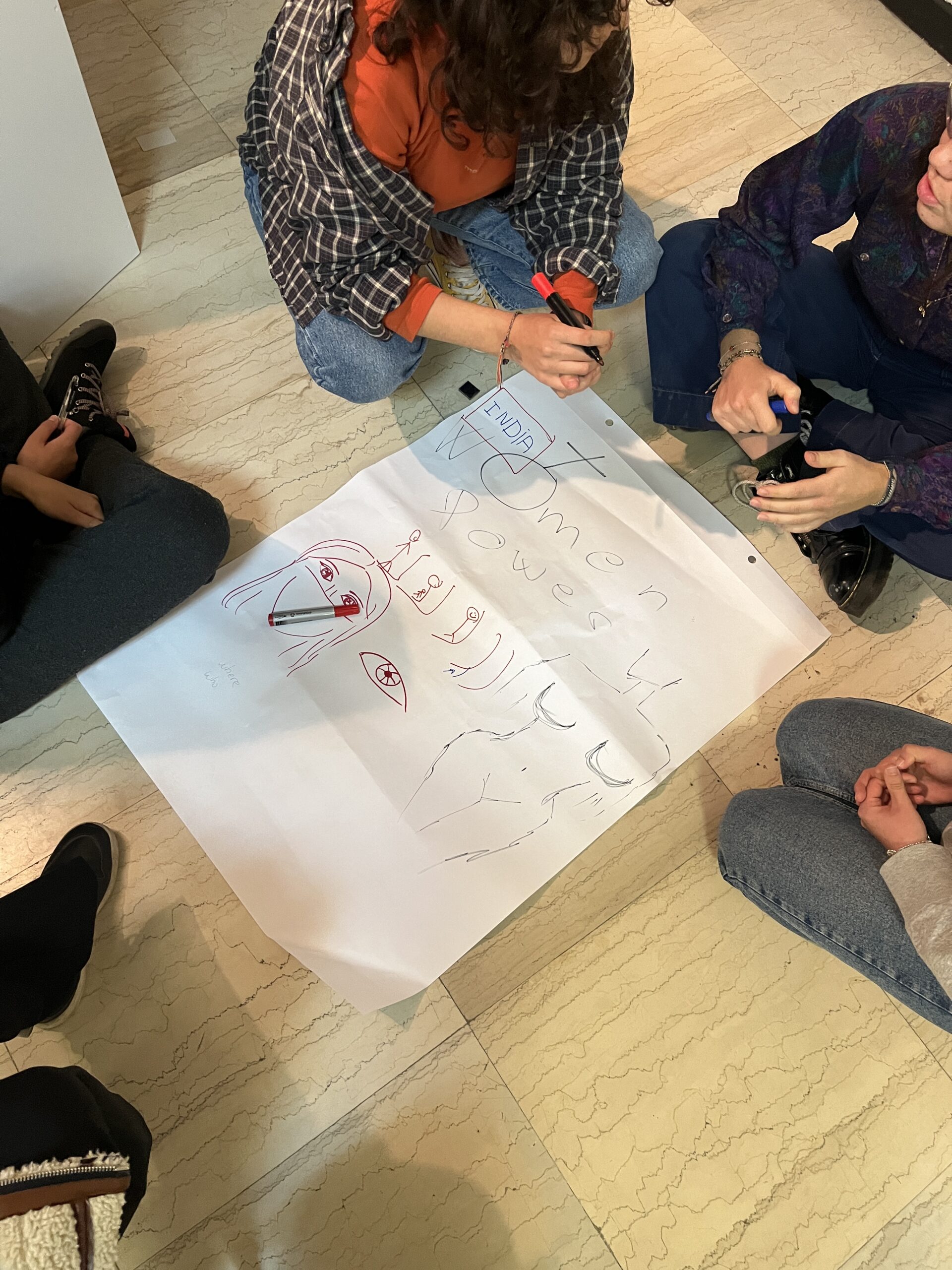
First, the participants are divided into
groups. Each group chooses one kind of
oppression and discuss it. The goal is to
create an image to start building up a story,
dynamising it. To do this, the teamer invites
them to bring their image to life by asking
following questions: “If your image could
make a movement, what would that be?”.
The participants then make various
movements using their bodies. “What
would your image say if it could speak?”
or “What would your image sound like if
it had a voice?”
Next, each group creates a short scene
demonstrating the oppression they have
discussed. This can be based on the
participants’ original sculpted image,
adding only the movement and word or
sound necessary to clarify its meaning for
the spectators, or it can be represented
in an entirely different way.
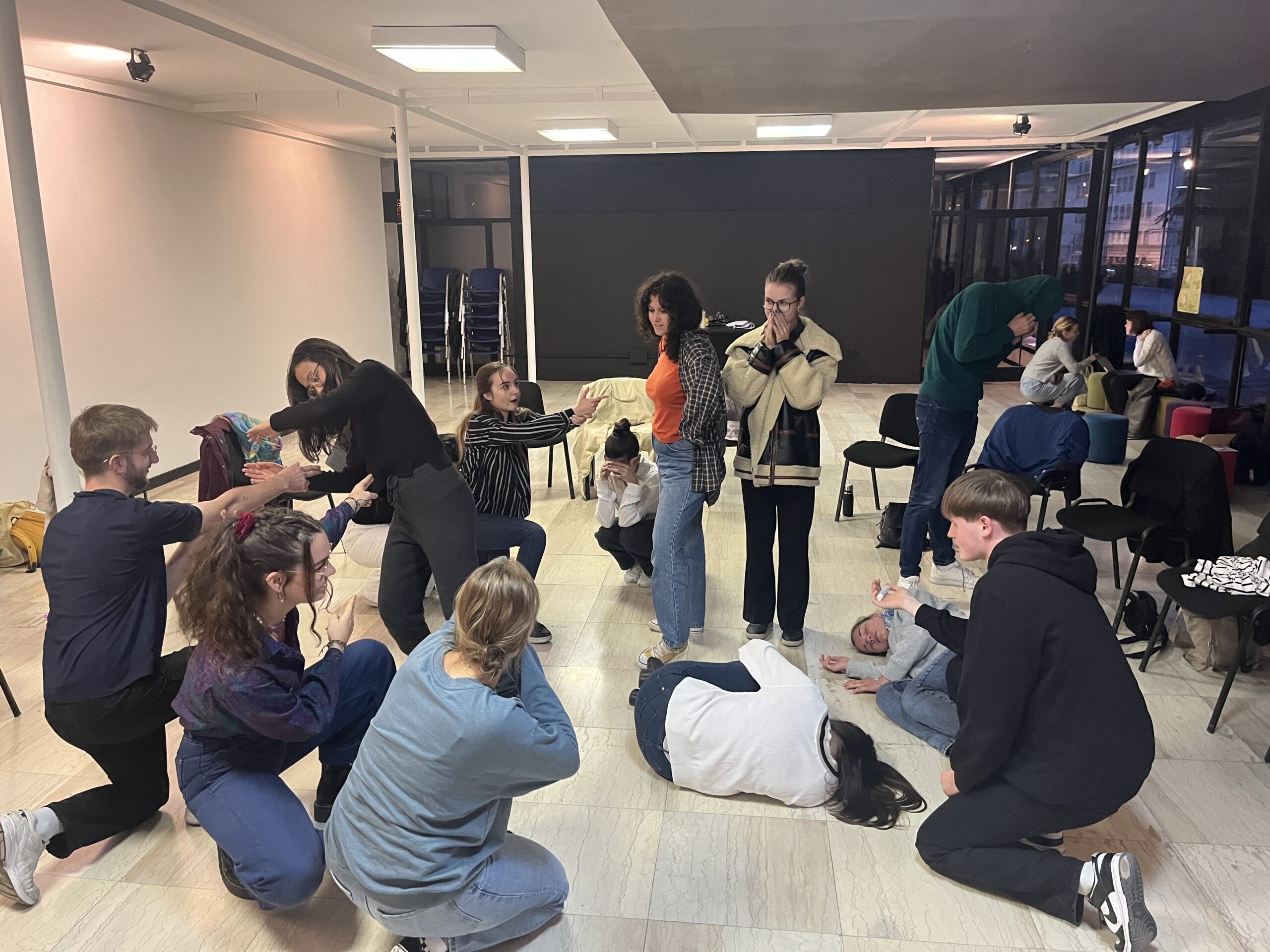
The groups can name their scenes, decide on the parts and place of oppression, and present them to the others, one by one. The other groups can act as the audience and be included in the scenes of the ones presenting. The facilitator should make this clear. The facilitator can also replace the people standing with the people sitting in order for them to get the feeling of being in someone else’s shoes.
Step 3 (10- 15 minutes): debriefing and closure activity
The image created previously is once again built with the whole group. Feelings and emotions are discussed. The closure activity can take the form of a storytelling circle, where all participants sit down and finish the story by saying one word that they will take with them for the day.
Recommendations
- The default seating arrangement for each activity is a circle. The facilitator should ensure that the circle does not become U-shaped or cut off by empty spaces.
- The facilitator should sit/take a seat at the same level or lower than the participants – preferably, everyone sits on the floor.
- If some participants have a disability and cannot sit on the floor, the facilitator should acknowledge that and encourage them to sit as comfortably as they wish. Everyone can sit on chairs in this case.
Background
As mentioned earlier, this form of theatre is credited to the Brazilian activist and theatre expert Augusto Boal. He was influenced by the work of Paulo Freire. He wanted to create a form of theatre wherein people become active and they explore, show, analyse and transform the reality they live in.
In his acclaimed book, ‘Theatre of the Oppressed’, Boal (1979) explains his philosophy behind this form of theatre. He argues against the Aristotelian coercive means of oppression by dividing theatre into the aristocrats (the protagonists on stage) and the masses (the chorus). Boal refers to how the bourgeoisie then gave these actors exceptional heroic values, making them the new aristocrats and widening the gap between them and the rest of the people. This was followed by Brecht’s form of theatre, which re-emphasised the character on stage, not as a subject but as an object of the social forces acting on him. Thus, according to Boal, the Theatre of the Oppressed completes the cycle by breaking down the barrier between the audience and the actors.
The book also talks about Image Theatre and Newspaper Theatre, and how it emerged as a way to represent local problems to the audience; it describes the experiments in Forum Theatre and Invisible Theatre (where theatre is performed in public places without the public knowing).