
Foreword
Dr. Andrea Despot, Executive Director of the EVZ Foundation
Anne Tallineau and Tobias Bütow, General Secretaries of the Franco-German Youth Office
How the project began
Five countries, over two thousand kilometres of travel and two centuries of numerous wars in Europe – these are the focal points of „War(s) in Europe. Shared experience, collective memory? – Germany, France, Bosnia and Herzegovina“, the first collaborative project between the Foundation Remembrance, Responsibility and Future (EVZ Foundation) and the Franco-German Youth Office.

In the fall of 2021, the Franco-German Youth Office and the EVZ Foundation started a co-creation process, along with facilitators and experts from the fields of history and civic education and international youth education, to develop a common project on the multiperspectivity of European remembrance. When it came to the question of what sort of project this would be, we developed several preconditions together. Firstly, with the beginning of Russia’s full-scale invasion of Ukraine, it became clear that the topic of wars and how to address them in the context of international education was going to be at the centre of our project. Secondly, in order to address the topic on a European level, we wanted to implement a trilateral project. For all involved parties, it very quickly became obvious that the third country next to France and Germany should be from the Balkan region, and the decision for Bosnia and Herzegovina was swiftly made. Thirdly, we wanted to create a sustainable project by developing and publishing methods that other facilitators could use in their work.
The first step of the project was a trilateral seminar for facilitators from Bosnia and Herzegovina, France and Germany in May 2023 in Lyon. The goal was to develop methods for a trilateral youth exchange, focusing on those that deal with the topic of war. All these methods were then tested during the trilateral youth exchange – the heart of our project, which took place in October 2023. It was a journey that took us not just from Paris to Sarajevo via Munich, Vienna and Zagreb, but also from learning about and remembering the First World War to the Second World War, the Bosnian War, and the ongoing war in Ukraine. Following this exchange, the facilitators evaluated and revised their methods during several online workshops and meetings. The result is this toolbox!
Acknowledgements
Throughout the last two and a half years of this project, many colleagues, experts and facilitators joined and supported this project with their input and expertise – thank you for your commitment! A special thank-you goes to all our participants who joined us on our journey through Europe and its landscape of remembrance.
About this publication
Whether as a central theme or a reflection on current events, the issue of war is very important in international youth exchanges. This publication aims to provide guidance on how to talk about war in such contexts. Key questions that have been examined include the occurrence of past and current wars in international youth exchanges and the impact of war on the history and identity of young participants.
The methods described in this handbook were purposefully developed during an expert exchange and tested during a youth exchange across five cities standing for significant military conflicts in Europe in the 20th century: Paris, Munich, Vienna, Zagreb, and Sarajevo. Young participants aged 18 to 24 from France, Germany, and Bosnia and Herzegovina took part in this exchange, testing the methods, and discovering the implications of the topic of war. Rather than a mere transfer of knowledge, these methods offer ways to tackle the topic of “War” in a youth exchange.
Primarily intended for youth workers, teachers, associations, and organisations in France, Germany and beyond, this publication is suitable for those grappling with the issue due to current events or the personal history of a participant. It serves as a guide for addressing the theme of war during intercultural exchanges.
Nevertheless the toolbox presents different types of methods to accompany a youth exchange or to choose an activity according to the desired objective: cooperative activities, group dynamics, language activities, physical expression, meetings with witnesses and guided tours.
Considerations regarding participants: it is advisable, though not mandatory, for participants in the youth exchange to have an interest in and a basic knowledge of the history and remembrance of wars. This is particularly important because some wars are more recent, and being in historical places or using certain methods to discuss them can be triggering and evoke strong emotions. Personal biographies may come up unexpectedly during the exchange, fostering connections with history. It is also crucial for facilitators to be aware of these sensitivities and react appropriately.
Documentation of the project
This handbook not only contains valuable methods, but also documents the evolution of the project, from the expert exchange in Lyon in May 2023 to the collaborative editing and reflection process. Developed by experts in formal and non-formal education from all three countries, each with experience in (international) youth work, the methods explore different experiences of war and conflict, as well as the European culture of remembrance.
The publication also recounts their journey from Paris to Sarajevo, revealing the reactions and learnings of the participants and the distinct impact that various places had on them.
In conclusion, this handbook offers not only a comprehensive guide for youth workers, but also the story of a transformative journey undertaken by young people. It is a testament to the effectiveness of the presented methods in real-life scenarios and a call to action for readers to incorporate these ideas into their own youth work.
The methods
Nine methods are used to tackle the theme of war in the 20th and 21st centuries with a journey through time and space. We started with methods for facilitating communication between the international participants during the 10-days trip. Effective communication in international youth exchanges is crucial for understanding and collaboration. The methods we tested – “The Ideal House” and “Chairs Dilemma” – were particularly adapted for our group and our subject.
Each city has its own theme, from the First World War in Versailles and Paris to the history of Munich linked to the rise of Nazism. The stopover in Vienna explores historical sites related to the Second World War, and the further trip from west to east leads us to Croatia and Bosnia and Herzegovina. In each city, we tried out specifical methods for tackling following subjects: the general topic of war and the First World War in Paris, then the Second World War individually, then collectively in Munich, and by exploring the historical landmarks in Vienna.
The visit to the Jasenovac Memorial – the site of a former concentration camp in Croatia during the Second World War – was emotionally intense, the camp being infamous for its extreme cruelty. Our last stop in Sarajevo revealed its rich background as a cultural crossroads and its significance in the First World War and Bosnian War. In Sarajevo two methods enabled participants to express their emotions in a city steeped in history. The „Image Theatre“ method allowed participants to convey emotions without verbalising them, while the „Living Library“ facilitated encounters between participants and witnesses to the past, as well as among participants with biographies linked to the wars of the 20th and 21st centuries.
The methods are presented as they have been used by the facilitators and adapted to the context of the youth exchange. Some of the methods are well known and have been used in work with young people for a long time, so they have been developed together with the pedagogical staff and the young people for years. In this toolbox the authors present their interpretation and use of the methods in this specific context.
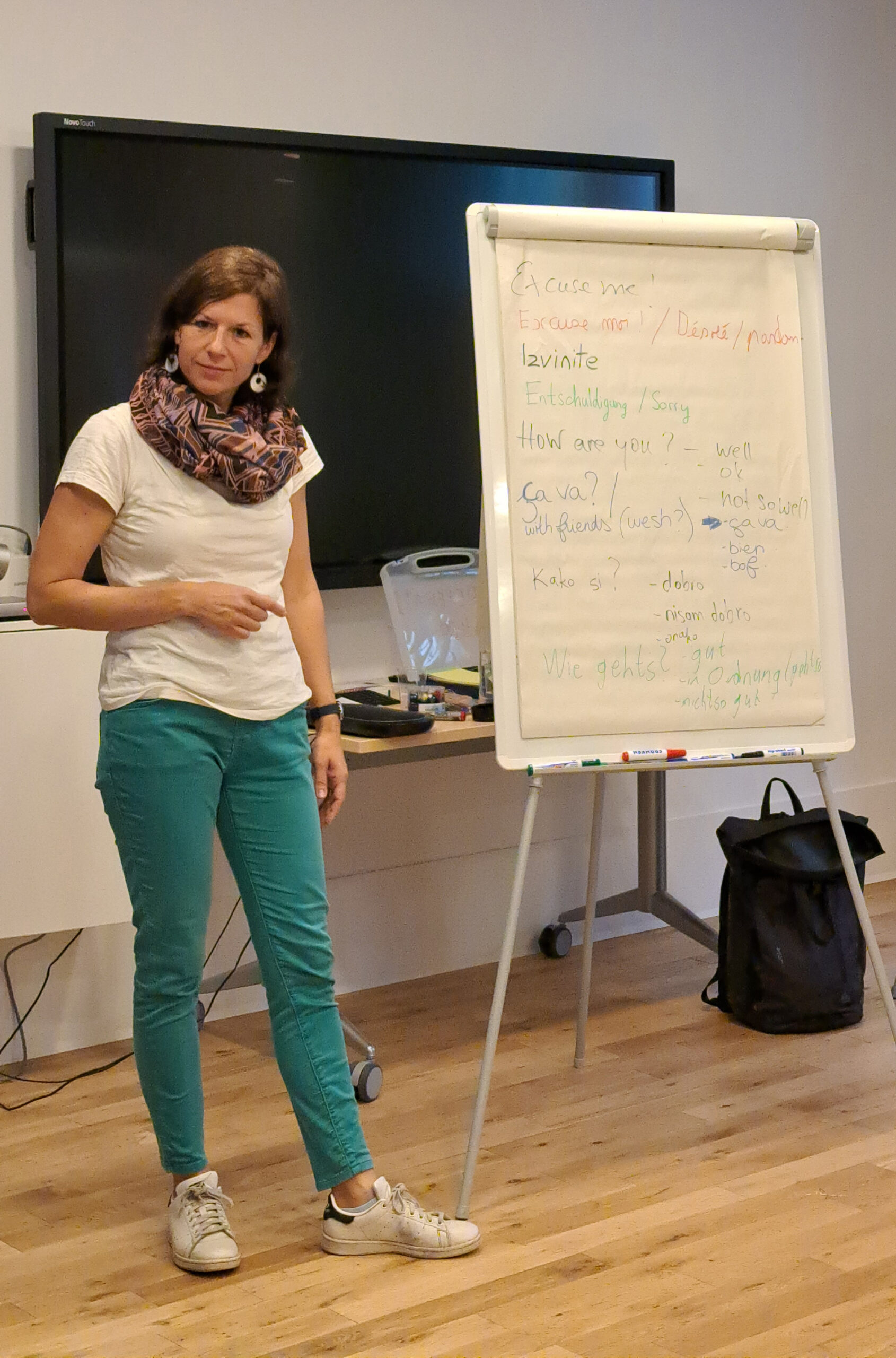

Toolbox with methods
The authors
Anna Kauert is a cross-cultural trainer and mediator, specialising in seminars focused on teamwork, communication and conflict solution. She provides preparation for international projects and ongoing support for multicultural processes. She has been offering services in German, English, and French for over ten years.
Anne Favre is a freelance intercultural trainer, youth worker and interpreter who has been working in the field of international youth work for 16 years. Her main areas of expertise are intercultural learning, civic education, history and memory. She lives in Vienna (Austria).
Dr. Nicolas Moll is a historian and freelance trainer in the field of intercultural cooperation and dealing with the past. He lives in Sarajevo, Bosnia-Herzegovina.
Milica Pralica is a civil activist, feminist, journalist and president of the civic association Oštra Nula, living and working in Banja Luka, Republika Srpska, Bosnia-Herzegovina.
Ida Karahasanovic-Avdibegovic is an English language and drama teacher, executive director and playwright. She works for the non-governmental association ReACT and at the Druga Gimnazija high school in Sarajevo, Bosnia-Herzegovina.
Anja Krsmanović is a professor at the JU SŠC “Vasilije Ostroški” high school in Sokolac, Bosnia-Herzegovina.
Anastasiia Rychkova is a trainer and facilitator for international youth exchanges with the organisation MitOst Hamburg e.V. She is currently working on the coordination of school support programmes in Hamburg.
Nathalie Chevalier is a French teacher with expertise in teaching French, history, and geography. She has worked with museums and cultural operators on projects promoting heritage and artistic and cultural education. As a historian and documentalist, she specialises in pedagogy, history and memory.
Marie-Céline Lorin is a history teacher in Grenoble, France.
Jelena Dragas is a project coordinator with the MUNJA social innovations incubator in Sarajevo, Bosnia-Herzegovina.
How to use this publication
This user-friendly documentation is designed for an easy navigation. It presents the youth exchange’s journey from Paris to Sarajevo, describing the thematic, emotional, and cultural challenges, with the visual support of a map. Each of the five explored cities is accompanied by a text describing the discovery of historical sites and the methods that have been tested. This handbook offers a multi-purpose toolbox, allowing you to select and use methods individually or in combination to meet your specific needs. Additionally, the insightful texts in the handbook share various experiences from different cities, helping to broaden your understanding and providing valuable context for your international youth exchange.
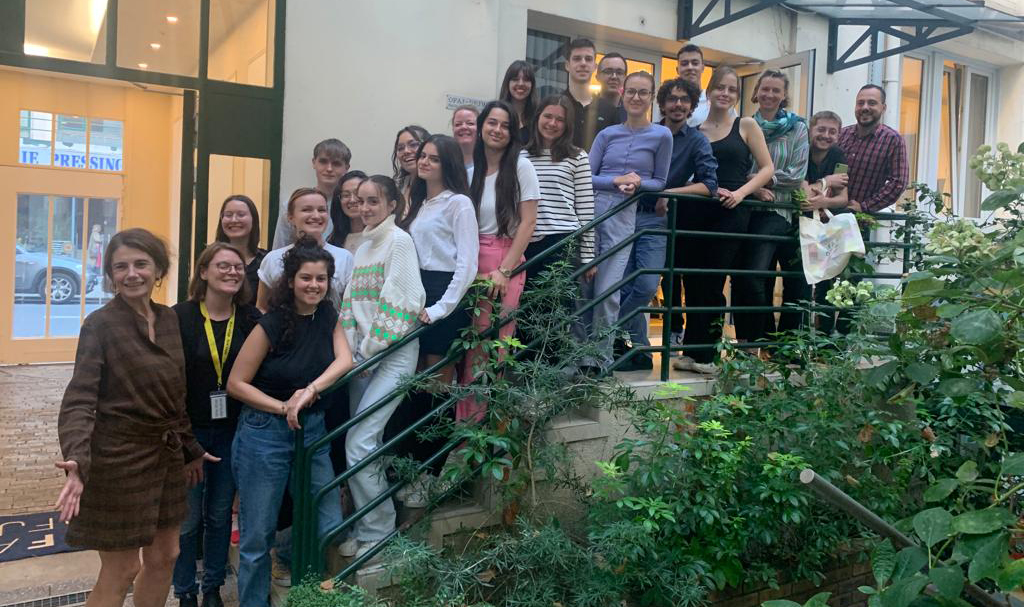
Authors: Merle Schmidt (EVZ Foundation) and Anne Schindler (FGYO)